
 EN

How to Build a Multi-Device Tablet Accessory Program for Brands and Distributors
For tablet accessory brands, distributors and education technology buyers, product planning is becoming more complicated.
A business may need to support several tablet brands, multiple screen sizes and different customer groups at the same time. One customer may be looking for a detachable keyboard case for an iPad. Another may need a protective keyboard solution for a Samsung tablet. A distributor may also want wireless keyboards, stylus pens or tablet protection products to complete its product portfolio.
Managing these requirements through separate suppliers can create unnecessary complexity. Different product standards, packaging systems, sample processes and delivery schedules may make it difficult to maintain consistency across the range.
A multi-device tablet accessory program offers a more structured approach.
Instead of sourcing one product at a time, brands and distributors can develop a coordinated portfolio covering keyboard cases, detachable keyboards, wireless keyboards, protective cases, stylus pens and related accessories.
For B2B buyers, this approach can help simplify product planning, improve brand consistency and create a more flexible supply chain.
What Is a Multi-Device Tablet Accessory Program?
A multi-device tablet accessory program is a product strategy designed to support several tablet ecosystems through one coordinated range.
Depending on the target market, the portfolio may include products for:
- Apple iPad
- Samsung tablets
- Huawei tablets
- Xiaomi tablets
- Universal tablet applications
- Phones and other mobile devices
The program may combine several accessory categories, such as:
- Tablet keyboard cases
- Detachable keyboard cases
- Leather keyboard cases
- Protective cases
- Wireless keyboards
- Keyboard and mouse combinations
- Stylus pens
- Tablet stands and related accessories
The purpose is not to develop an unlimited number of products. It is to create a practical portfolio that matches customer demand while remaining manageable for procurement, inventory and after-sales support.
Why Product Portfolio Planning Matters for B2B Buyers
A single product rarely serves every customer
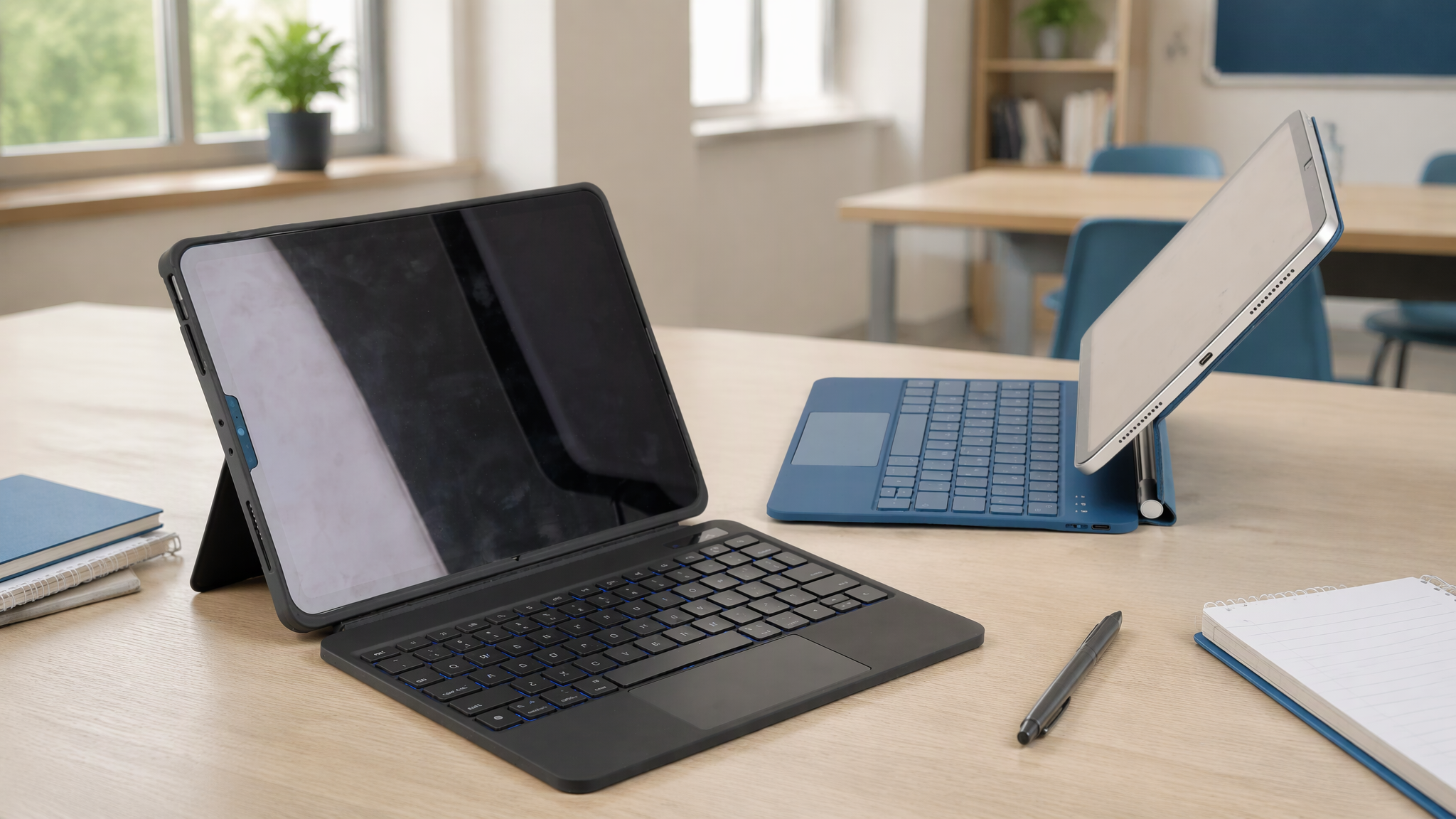
A premium leather keyboard case may appeal to business users and retail customers, but it may not be the right choice for a school project. An education buyer may prioritize protection, easy deployment and simple maintenance. A distributor serving mobile professionals may focus more on portability, appearance and multi-device compatibility.
Different customer groups may require different product roles.
A portfolio approach allows a buyer to organize products according to application instead of trying to make one product satisfy every market.
More SKUs create more management pressure
Supporting several tablet models creates operational challenges:
- Product compatibility must be checked carefully.
- Packaging must match each device version.
- Product images and descriptions must be accurate.
- Samples need to be tracked separately.
- Inventory planning becomes more complicated.
- Reorders may involve different quantities and timing.
- A product update may affect several related accessories.
Without a clear product structure, a brand can accumulate SKUs without building a coherent range.
The goal of portfolio planning is to create useful coverage without unnecessary duplication.
Start with Customer Segments, Not Tablet Models
Many buyers begin by listing every tablet model they want to support. This may seem practical, but it can lead to an oversized and unfocused product range.
A stronger approach is to begin with customer segments.
Education and institutional buyers
Schools, training centers and education distributors may prioritize:
- Tablet protection
- Physical typing
- Easy setup
- Stable daily use
- Simple maintenance
- Local keyboard layouts
- Consistent batch supply
The product structure should be evaluated according to classroom handling, transportation, storage and device management.
Retail and consumer electronics brands
Retail-focused brands may need products with:
- Clear shelf appeal
- Consistent brand colors
- Attractive packaging
- Recognizable product families
- Several device compatibility options
- Seasonal or channel-specific configurations
The product does not have to be identical across all models, but the range should feel connected.
Business and portable productivity users
Business users may look for:
- Detachable keyboard designs
- Wireless connectivity
- Portable form factors
- Comfortable typing
- Protection for mobile use
- Accessories that support a complete workstation
This group may overlap with tablet users who work from home, travel or move between office locations.
Distributors and importers
Distributors often need flexibility. They may serve different retailers or regions with different product preferences.
Their requirements may include:
- Mixed product categories
- Private-label packaging
- Different language layouts
- Flexible replenishment
- Stable product specifications
- Support for repeat orders
Understanding these groups helps buyers decide which product families deserve priority.
Build a Clear Product Architecture
Once the target customers are defined, the next step is to organize the portfolio.
A practical product architecture may include three levels.
Core products
Core products are the models expected to generate regular demand. They should be selected based on target device compatibility and the main customer segment.
For example, a distributor may choose several key tablet keyboard cases as its main range, then add a small number of wireless keyboards or protective cases.
Market-specific products
Market-specific products are developed for a particular region, customer group or sales channel.
They may include:
- Regional keyboard layouts
- Localized packaging
- Special color options
- Education-focused protection
- Retail-specific product bundles
- Brand-specific appearance requirements
These products can help a business differentiate itself without changing the entire product system.
Development products
Development products are new concepts being tested for future growth. They may include a detachable design, a new tablet generation, a new material or a different accessory combination.
Keeping development products separate from core products helps buyers avoid overcommitting inventory before demand has been confirmed.
Use a Compatibility Matrix Before Requesting Samples
A compatibility matrix is one of the most useful tools for a multi-device accessory program.
It should record:
- Device brand
- Device model
- Screen size
- Generation or release version
- Case compatibility
- Keyboard layout
- Connection method
- Charging or power requirements
- Product status
- Sample status
- Packaging status
This document helps prevent a common B2B problem: assuming that two tablet models with similar dimensions can use the same accessory.
A supplier should review the matrix before sample development. Product titles, images and specifications should also be checked against the approved device information.
For buyers managing several products, accurate compatibility data can reduce returns, customer complaints and unnecessary sample changes.
Standardize the Brand, Not Every Product
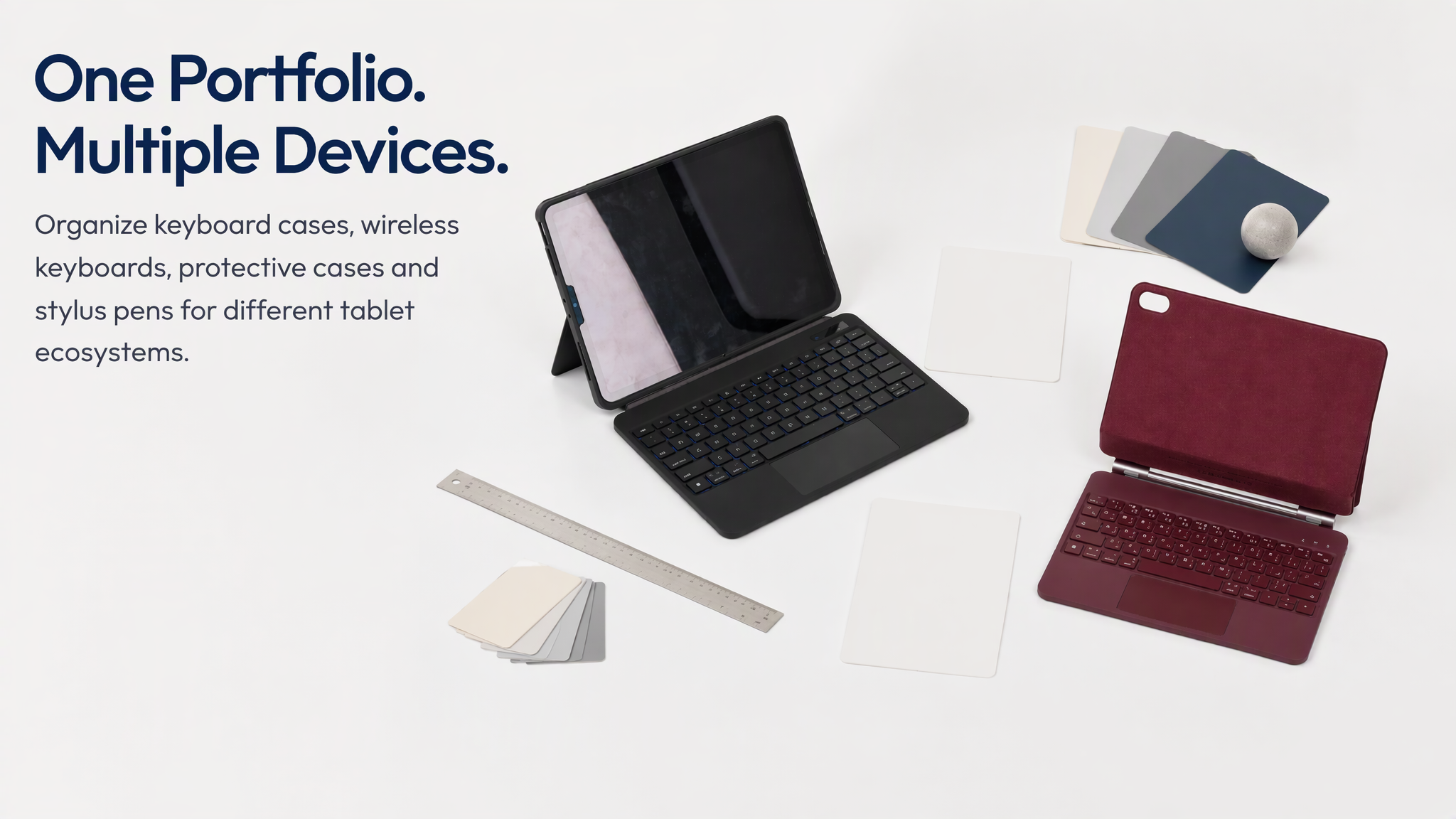
A multi-device portfolio does not need every product to have the same structure. Different devices and users may require different designs.
However, the brand experience should remain consistent.
Standardization may be applied to:
- Logo placement
- Color direction
- Packaging hierarchy
- Product naming
- Instruction format
- Label design
- Product photography
- Quality expectations
- Customer support materials
This creates a recognizable product family while allowing the design to adapt to different tablets.
For example, an education keyboard case and a premium detachable keyboard may have different structures, but they can still share consistent packaging and brand presentation.
Combine Keyboard Cases with Related Accessories
A supplier with a broader tablet accessory range can support more than one product category.
A brand may plan a combination of:
- Keyboard cases
- Protective cases
- Detachable keyboards
- Wireless keyboards
- Stylus pens
- Tablet stands
- Keyboard and mouse combinations
These products can be sold separately or organized into bundles for different channels.
Education bundles
An education buyer may require a tablet keyboard case together with a stylus pen or protective accessory.
Retail bundles
A retail brand may create a tablet productivity package that combines a keyboard case, stand and stylus.
Business bundles
A business-focused distributor may offer a keyboard, mouse and tablet stand as a portable office solution.
The exact bundle should be based on the target user's needs. The advantage is that buyers can plan the accessories as a product system rather than presenting unrelated items.
Where OEM and ODM Fit into Portfolio Development
OEM for controlled specifications
OEM is useful when a buyer already has clear requirements for:
- Device compatibility
- Product structure
- Keyboard layout
- Logo application
- Packaging
- Materials
- Functional design
This model may be appropriate for established brands or institutional projects with defined specifications.
ODM for faster portfolio expansion
ODM can be useful when a buyer wants to build a product family around an existing platform.
A buyer may customize:
- Product color
- Logo
- Packaging
- Key layout
- Selected functions
- Accessory combinations
This allows a distributor or new brand to expand its product range without developing every product from the beginning.
The buyer should still confirm which elements are customizable, how product exclusivity is managed and whether the platform can support future device versions.
Why Supply Chain Coordination Matters
A multi-device program involves more than the final keyboard case.
The supplier may need to coordinate:
- Product materials
- Keyboard components
- Cases and structural parts
- Packaging
- Labels
- Manuals
- Accessories
- Sample revisions
- Quality inspection
- Production scheduling
If every product is managed by a separate supplier, the buyer may face inconsistent quality, different communication processes and difficult replenishment planning.
Keysco’s public company information describes its focus on tablet accessories, OEM/ODM customization, product development and a supply chain for keyboard raw materials. Its product range publicly includes keyboard cases, wireless keyboards, protective cases, stylus pens and related tablet accessories.
This type of product coverage can be useful for B2B buyers that want to develop a broader accessory program with one product partner.
The exact supply arrangement, MOQ, tooling cost and production schedule should be confirmed for each project.
Sample Approval Should Cover the Whole Product Family
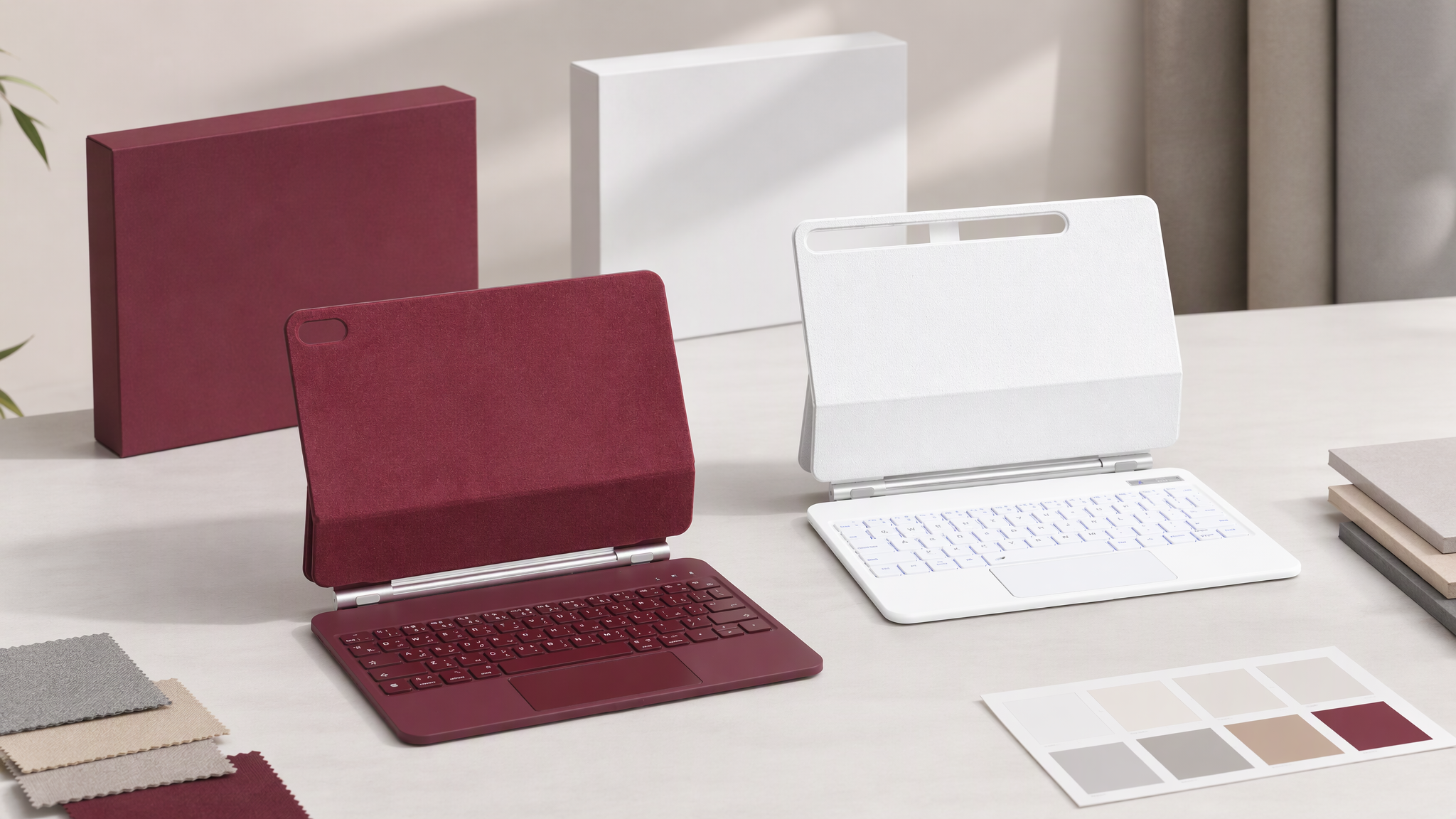
Approving one sample is not always enough for a multi-device program.
Buyers should review:
- Product fit
- Keyboard performance
- Viewing angle
- Case structure
- Connection behavior
- Material and surface finish
- Logo position
- Packaging
- User instructions
- Differences between device versions
A “golden sample” or approved reference sample can help define the production standard. For multiple SKUs, each product should have its own approved reference while following the same overall quality requirements.
This is particularly important when the portfolio includes different materials or product structures.
Plan Reorders and Product Updates Early
Tablet models change over time. A product that performs well today may need to be updated for a new device generation.
A B2B buyer should discuss:
- How future models will be evaluated
- Whether the existing structure can be adapted
- Which components may remain common
- How packaging will be updated
- How old inventory will be managed
- Whether repeat orders can follow the original standard
This type of planning is especially important for distributors and education buyers, who may need to maintain a product range over several purchasing cycles.
Why Keysco Can Support a Broader Accessory Program
Founded in 2011, Shenzhen Keysco Technology Co., Ltd. publicly positions itself as a tablet accessory manufacturer.
Its website presents product categories covering:
- Magic keyboard products
- Detachable keyboard cases
- Leather keyboard cases
- Protective cases
- Wireless keyboards and mice
- Stylus pens
- Education keyboard cases
- Tablet and phone accessories
The company also publicly presents OEM/ODM customization, private model development, structural design and mould development. Its manufacturing information refers to incoming material checks, in-line inspection and pre-shipment sampling against an approved sample.
For brands, distributors and importers, these capabilities are relevant when the project involves more than one product or device model.
The appropriate solution still depends on the target market, device list, quantity, product structure and customization requirements. Buyers should provide detailed project information before requesting a quotation or sample plan.
Frequently Asked Questions
What is a multi-device tablet accessory program?
It is a coordinated product portfolio designed to support multiple tablet models or customer segments through related accessories such as keyboard cases, wireless keyboards, protective cases and stylus pens.
Is it better to use one supplier for several tablet accessory categories?
Using one supplier may simplify communication, product development and quality coordination, but the supplier's actual capability should be evaluated. Buyers should confirm product experience, samples, specifications and production support for each category.
Can a brand use different products while keeping the same branding?
Yes. Product structures may vary by device and application, while colors, Logo placement, packaging and documentation can follow a consistent brand system.
What should I prepare before starting a portfolio project?
Prepare the target device list, customer segments, estimated quantities, target markets, preferred products, keyboard languages, packaging requirements and expected launch schedule.
Build a More Manageable Tablet Accessory Portfolio
For brands, distributors, importers and education buyers, a multi-device tablet accessory program can make product planning more structured and scalable.
The objective is not to list every possible tablet model. It is to build a clear range that matches customer needs, supports reliable replenishment and gives the brand room to develop over time.
Keysco provides tablet keyboard cases, detachable keyboards, wireless keyboards, protective cases, stylus pens and related accessories, together with publicly presented OEM/ODM and product development support.
Share your target devices, customer segments, estimated quantity and branding requirements with Keysco to explore a practical multi-device tablet accessory program.