
 EN

iPad mini 8 Magic Keyboard Development: Lightweight Structure and AG Glass Trackpad Innovation
For a tablet keyboard manufacturer, developing a new model is not simply a matter of resizing an existing product. A new tablet can change the requirements for the case, camera opening, magnetic connection, hinge position, keyboard proportions and trackpad area at the same time.
The challenge is even more noticeable with the iPad mini. Its compact body leaves less structural space than larger iPad models, while its portability makes overall thickness and weight especially important. For the iPad mini 8 project, commonly referred to by Apple as the iPad mini (A20 Pro), we purchased the new device immediately after launch, carried out physical testing and refined our previous iPad mini 6/7 Magic Keyboard platform. The project also introduced an AG glass full-surface trackpad for the first time in this product line.
The result is a development approach designed for B2B brands, distributors and tablet accessory buyers who need fast model adaptation, premium product differentiation and a reliable path from sample approval to production.
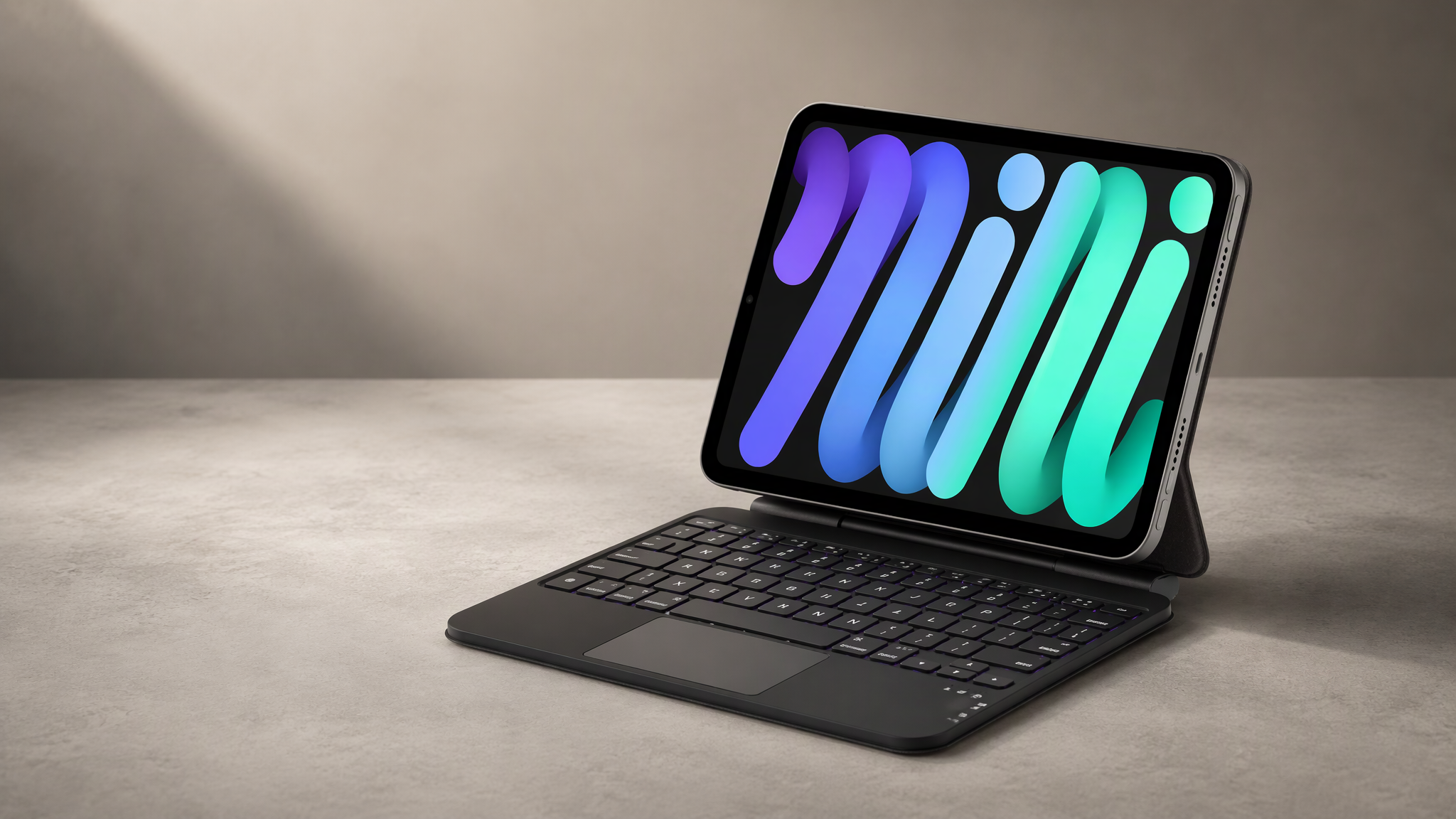
iPad mini 8 Official Release Date and Dimensions
According to Apple’s official public information, the latest iPad mini is officially named iPad mini (A20 Pro). Apple announced the product on October 26, 2026. Pre-orders began on October 28, and official availability started on November 6, 2026.
Apple’s official technical specifications list the following body dimensions for the iPad mini (A20 Pro):
- Length: 195.3 mm
- Width: 132.6 mm
- Thickness: 5.4 mm
For comparison, Apple lists the previous iPad mini (A17 Pro) at 195.4 × 134.8 × 6.3 mm. The length remains almost unchanged, while the width and thickness are different. These variations may appear small to an end user, but they can affect the fit of a keyboard case, the position of a camera cutout, the alignment of magnetic contacts and the performance of a hinge assembly.
This is why a new model should be verified with a physical device rather than developed only from online images or a previous product file.
Building on an Existing iPad mini 6/7 Platform
Before the new iPad mini arrived, we had already developed a Magic Keyboard compatible with the iPad mini 6/7 platform. That product provided a useful engineering reference for:
- Keyboard proportions for the compact iPad mini format
- Magnetic connection and positioning logic
- The relationship between the protective case and the tablet body
- Hinge movement and support structure
- Space allocation between the keyboard, trackpad and palm rest
However, an existing platform cannot simply be reused without verification. A reference product can accelerate development, but it does not remove the need for new measurements and physical testing.
For B2B buyers, this balance is important. A manufacturer should be able to use mature product experience to shorten development time, while still making the necessary structural changes for each new tablet generation. Reusing an old mold without checking the new device can create loose fitting, blocked camera openings, uneven edges or unstable support.
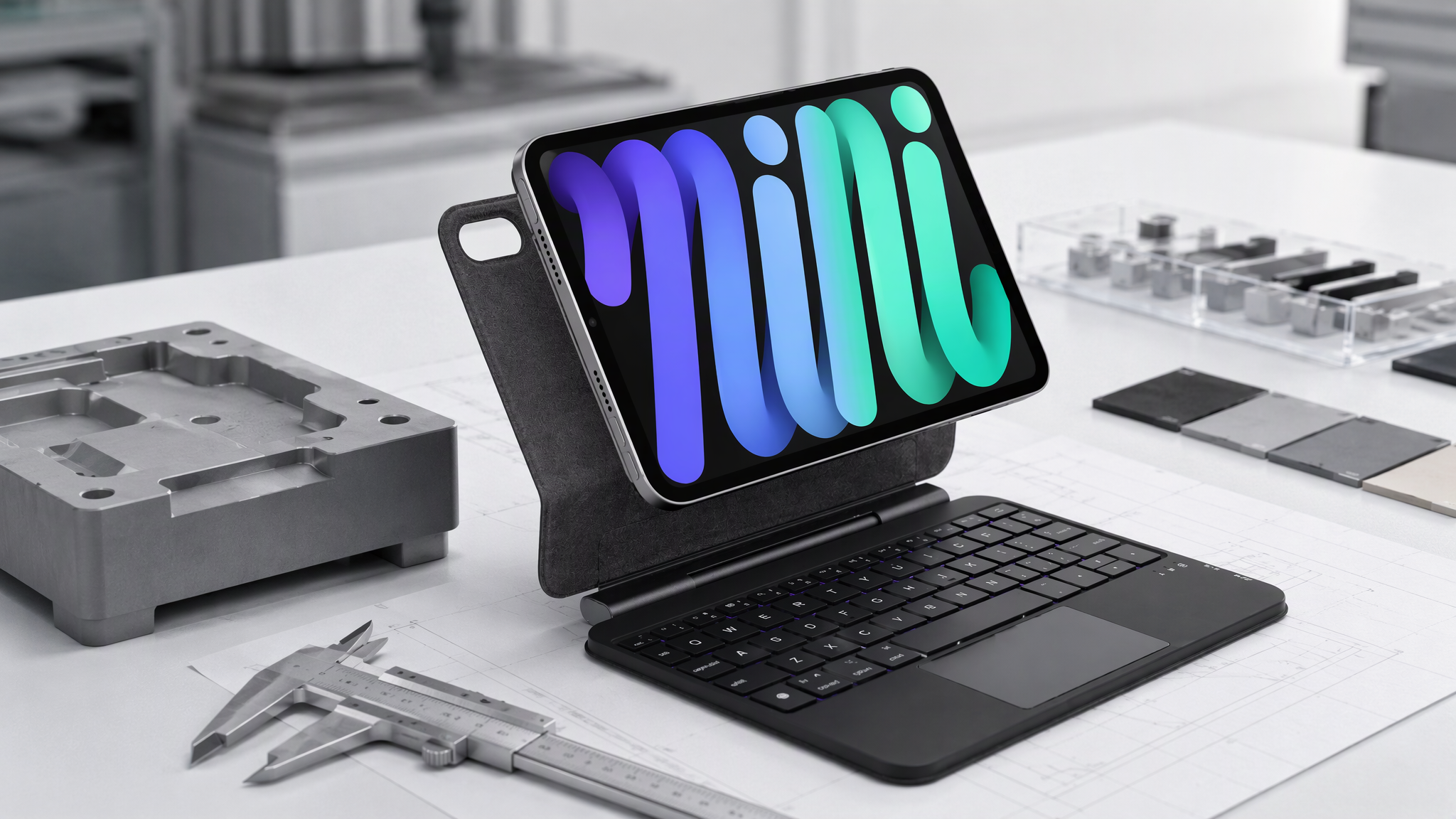
Purchasing the New Device for Real Compatibility Testing
After the new iPad mini was released, we purchased the device and used it for hands-on testing. The objective was not only to confirm whether the tablet could be installed, but also to evaluate the complete user experience and production feasibility.
Checking body fit and edge alignment
We checked how the protective case fits around the tablet, including the edges, corners and contact areas. The case must avoid excessive looseness, excessive pressure and interference during installation. With a compact tablet, even a small dimensional error can be noticeable when the user handles the product every day.
Verifying magnetic connection and stability
A Magic Keyboard-style product needs more than basic magnetic attachment. The tablet must remain stable during opening, closing, carrying and normal typing. We rechecked the magnetic area, positioning structure and relative alignment between the tablet and keyboard base to support a consistent user experience.
Reworking the camera opening
Compared with the existing mini 6/7 version, the camera area of the new iPad mini required a different opening arrangement. We measured the actual device, reviewed the opening position and adjusted the related mold structure. The goal was to provide clear camera access while maintaining a clean appearance around the opening.
Testing the hinge and opening experience
The hinge influences screen angle, support stability, folded thickness and the overall feel of the product. We therefore tested the hinge position together with the protective case, tablet body and keyboard base. The opening motion and support angle were then reviewed as part of the complete assembly rather than as an isolated component.
Why We Chose a Second-Generation Hinge
The iPad mini is designed around portability. Compared with larger iPad models, it is easier to hold, carry and use in compact workspaces. A keyboard accessory for this device should support that positioning instead of adding unnecessary bulk.
For this reason, the iPad mini 8 Magic Keyboard uses only the second-generation hinge solution. The structure is intended to support the opening and positioning requirements while helping us control the overall thickness and weight of the keyboard case.
The design decision is not simply about reducing parts. It requires a balance between:
- Hinge stability
- Usable screen angles
- Keyboard base support
- Folded product thickness
- Carrying comfort
- Long-term structural performance
For B2B brands, lightweight construction can influence more than the product specification sheet. It affects retail positioning, product portfolio consistency, shipping considerations and the final impression of a premium tablet accessory. The second-generation hinge helps the keyboard maintain its functional concept while matching the compact character of the iPad mini.
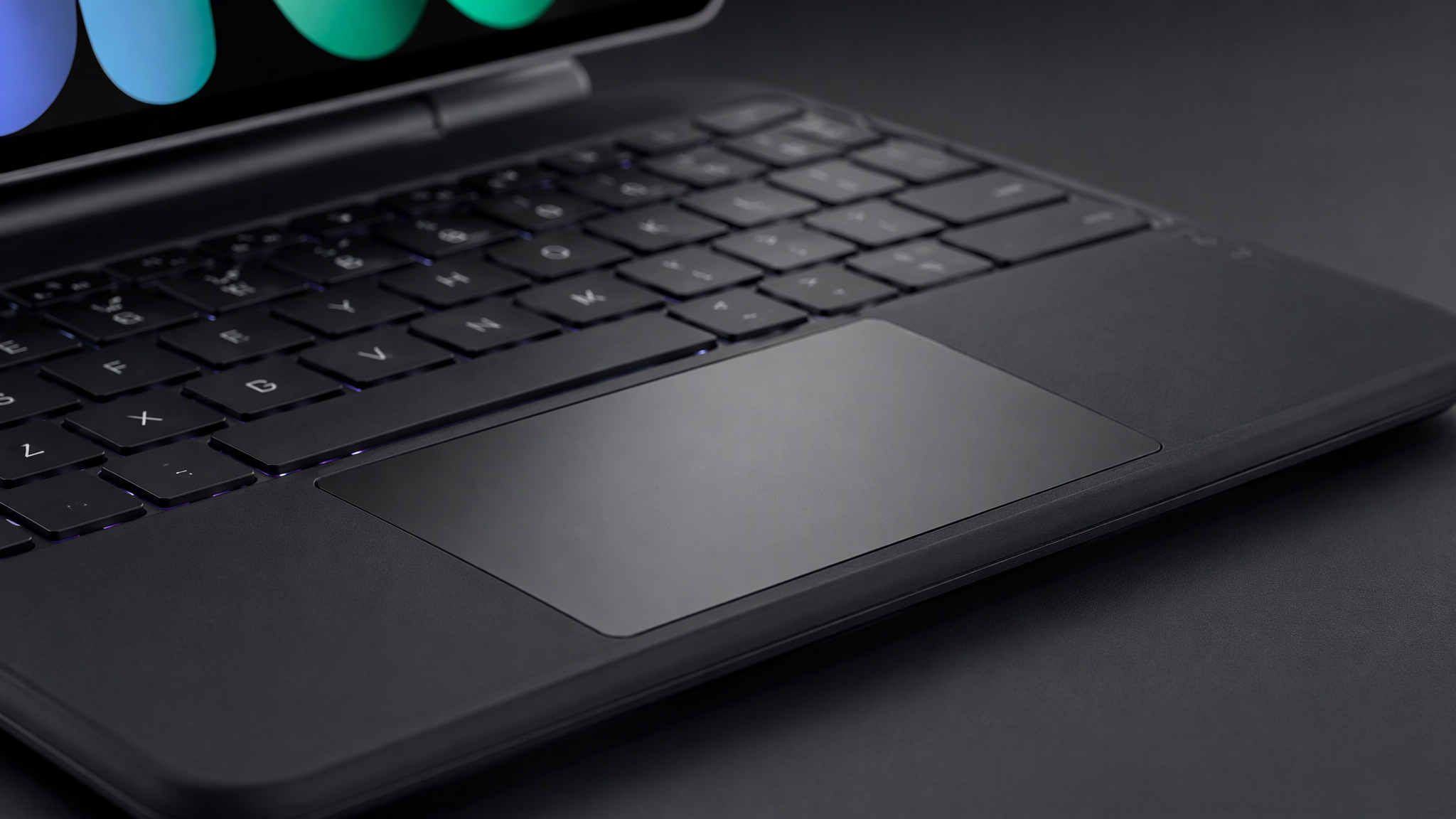
First Application of an AG Glass Full-Surface Trackpad
The key innovation in this project is the first application of an AG glass full-surface trackpad in this product line.
AG, or anti-glare, glass provides a distinct surface direction for premium tablet accessories. With the appropriate surface treatment, it can create a finer touch feel, reduce distracting reflections and deliver a more refined visual appearance than a conventional trackpad surface.
The full-surface concept is not only about making the trackpad larger. It is about providing a more continuous interaction area for scrolling, cursor movement and gesture control. For users who work on the move, edit content or switch frequently between applications, the smoothness and usable area of the trackpad can make a meaningful difference to daily comfort.
During development, we focused on several details:
- Surface fineness and anti-glare performance
- Smoothness and resistance during finger movement
- Proportion between the trackpad, palm rest and keyboard edge
- Assembly compatibility between the glass trackpad and keyboard structure
- Visual appearance under different lighting conditions
- Alignment between the trackpad finish and the customer’s premium product positioning
For brands and distributors, the AG glass full-surface trackpad can serve as a clear upgrade option. It may help separate a standard model from a premium version and can be developed together with custom colors, keyboard layouts, branding, packaging and product configurations.
Structural Optimization Goes Beyond One Mold Change
New-device adaptation often involves several parts and processes. In the iPad mini 8 project, the change in body dimensions and camera area required mold modification, but the work did not stop there.
We also reviewed the relationship between the protective shell, keyboard base, camera opening, hinge connection and folded structure. The key questions included:
- Is the assembled product level and even?
- Could any edge create unwanted friction or scratching?
- Does every opening align with the tablet’s functional areas?
- Is the space between the screen and keyboard appropriate?
- Does the folded product remain clean without local bulges?
- Does the open product provide stable support?
- Can the approved sample be reproduced consistently in mass production?
This is an important distinction between a display sample and a production-ready B2B solution. A sample demonstrates an idea. A complete development project must also support repeatable manufacturing, quality control, replenishment orders and future model updates.
From Rapid Adaptation to Premium OEM/ODM Development
For brands, distributors and professional tablet accessory buyers, the development process can be organized into several stages.
1. Define the product and market position
The project begins with the target device, sales market, keyboard layout, thickness, color, connection solution and customer profile. The buyer must also decide whether the project requires a standard product, a private-label version or a premium differentiated model.
2. Measure the physical device and validate the structure
The actual tablet is used to check dimensions, camera position, magnetic areas, ports and opening space. These findings are then reflected in the structural design and mold revision.
3. Tune function and user feel
The team evaluates key response, trackpad movement, keyboard layout, hinge motion and overall support. If the project includes an AG glass trackpad, surface finish, visual quality and touch feel require additional confirmation.
4. Confirm the sample and refine the details
Based on buyer feedback, the project can be adjusted for color, material, logo application, packaging and configuration. An approved golden sample can then provide a reference for production consistency.
5. Prepare for production and future models
Before mass production, materials, mold condition, process controls and inspection requirements should be reviewed. This creates a more reliable basis for repeat orders and future iPad model adaptation.
What This Project Means for B2B Buyers
The iPad mini 8 Magic Keyboard project represents more than one new product. It is part of our ongoing effort to expand coverage across the iPad family and provide a faster response to new device launches.
For B2B customers, the main value lies in three capabilities:
- Fast device adaptation: purchasing the new tablet quickly and starting physical testing after launch.
- Practical structural engineering: modifying dimensions, openings and molds according to real compatibility results rather than reusing old files without verification.
- Premium customization: developing hinge options, trackpad materials, colors, keyboard layouts, logo applications and packaging around the customer’s positioning.
For a brand building a long-term tablet accessory portfolio, the goal is not simply to buy one keyboard case. The more important question is whether the manufacturing partner can continue to follow device updates, solve fit issues quickly and support product upgrades without losing control of quality and production consistency.
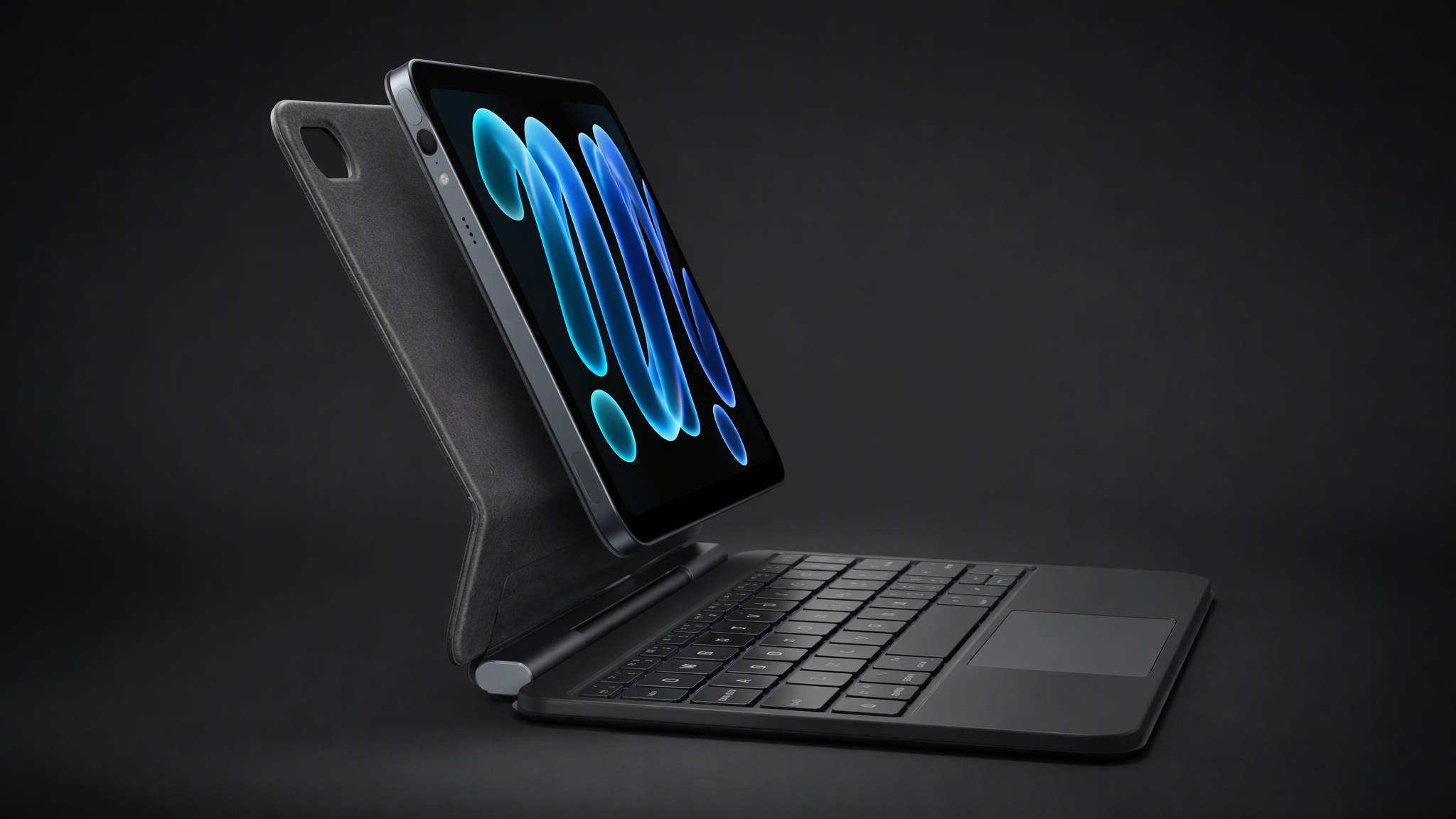
Conclusion: Making a Compact Tablet More Productive
The compact size of the iPad mini creates a clear design challenge for keyboard accessory development. We selected the second-generation hinge to keep the product thinner and lighter, while preserving the core Magic Keyboard experience. We also introduced an AG glass full-surface trackpad to provide a smoother, more comfortable and more premium interaction experience for high-end customers.
From purchasing the new device and checking real compatibility to revising the camera opening, modifying the mold and refining the trackpad, every stage required attention to structure and detail.
This project demonstrates how a tablet keyboard manufacturer can combine rapid adaptation with premium OEM/ODM development. If you are planning an iPad mini 8 (A20 Pro) keyboard case, Magic Keyboard-style accessory or broader iPad accessory program, contact us to discuss product positioning, structural options, customization requirements and production planning.
Frequently Asked Questions
Is iPad mini 8 Apple’s official product name?
No. Apple officially identifies the latest model as iPad mini (A20 Pro). “iPad mini 8” is used in this article to match common project and search terminology.
When was the latest iPad mini officially released?
Apple announced iPad mini (A20 Pro) on October 26, 2026. Pre-orders began on October 28, and official availability started on November 6, 2026.
Can the iPad mini 8 use the same keyboard case as the iPad mini 6/7?
Compatibility should not be assumed from the product name alone. Because the new device has different body dimensions and camera-area requirements, the keyboard case should be verified with the actual tablet and adjusted where necessary.
Who is an AG glass full-surface trackpad suitable for?
It is suitable for brands and distributors that value touch comfort, product finish and premium differentiation. The final configuration should be assessed together with the target market, cost structure and order plan.
Can the keyboard case be customized?
Customization can be evaluated for colors, keyboard layouts, logo application, materials, packaging and product configuration. MOQ, tooling costs and lead time should be confirmed according to the specific project.

